One of the most common questions we get is simply “what’s this going to cost me?” Here’s a realistic breakdown across three budget tiers.
Tier
Chartplotter/Fish Finder
Trolling Motor
VHF
Typical Total
Budget
£300-£500
£400-£800 (or none)
£80-£150
£500-£1,500
Mid-range
£800-£2,000
£1,500-£2,500
£150-£300
£2,500-£5,000
Premium/tournament
£3,000-£6,000+
£2,500-£3,500
£300-£500
£6,000-£10,000+
Where to spend first
If budget is tight, prioritise a reliable fish finder/chartplotter combo over a premium trolling motor — you can upgrade the motor later without touching the wiring you’ve already run for the display. See our full price breakdown by category or browse the shop directly.
Working to a specific budget? Tell us your number and we’ll suggest the best combination of genuine gear for it.
Walking into fish finder shopping cold is genuinely confusing — screen sizes, sonar types and acronyms everywhere. Here’s what actually matters when choosing your first unit.
1. Screen size
Bigger isn’t always better — it’s about your boat and budget. A 5-7 inch screen suits kayaks and small boats. 9 inches is the sweet spot for most trailer boats. 12 inches and up make sense once you’re running split-screen views or forward-facing sonar regularly.
2. Sonar type
CHIRP (traditional) sonar — shows fish arches and bottom structure directly below the boat
Down imaging — near-photographic detail directly beneath you, great for identifying structure
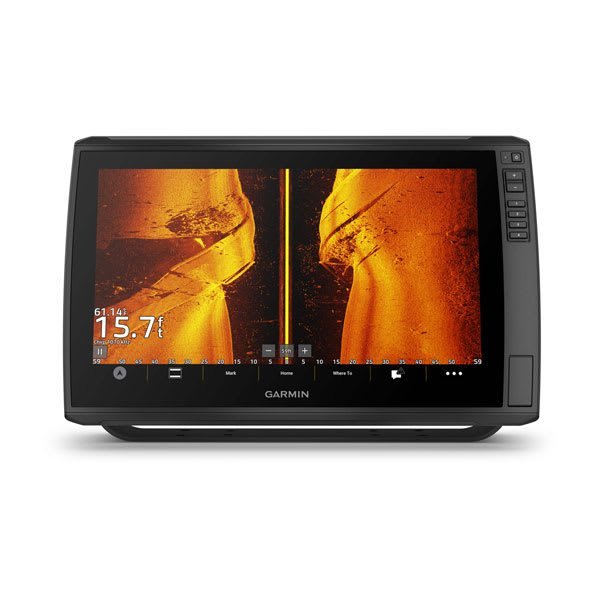
Side imaging — scans wide to either side, excellent for covering water quickly to find structure and schools
3. Do you need GPS?
If you want to mark waypoints, navigate home in poor visibility, or eventually add charts, get a GPS-equipped unit from the start — retrofitting later means buying a new unit rather than adding a module.
New marine electronics hold their price for a reason — but buying used marine electronics from a specialist retailer can cut hundreds off a purchase without cutting corners on reliability, if it’s done properly. Here’s exactly what “used” means when you buy from us.
What our inspection actually covers
Full power-on test — display, touchscreen and physical controls
Sonar and GPS function verified against a known-good signal
Networking ports and cabling checked
Cosmetic condition graded honestly in the listing
What’s covered by warranty
Every used unit we sell carries our 90-day used-goods warranty, separate from the manufacturer’s original warranty (which typically doesn’t transfer to a second owner). If a unit develops a genuine fault within that window, we sort it — full details on our warranty page.
When used makes sense — and when it doesn’t
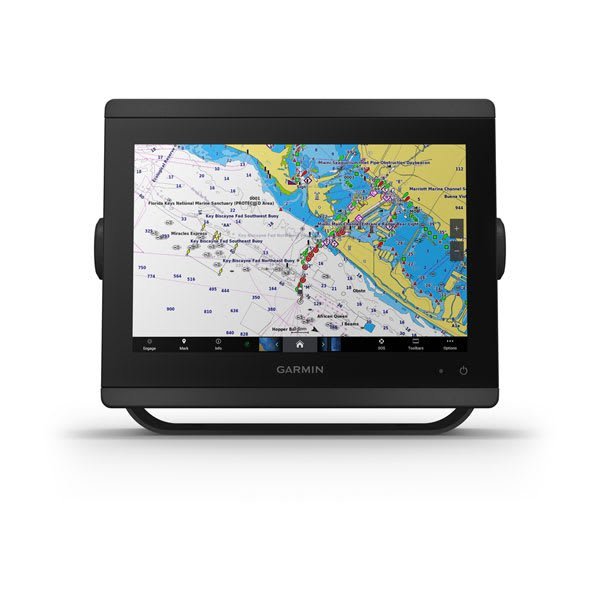
Used is a great fit for a second station, a budget-conscious first chartplotter, or high-value items like 12-inch and 16-inch displays where the new-vs-used price gap is largest — see our used Garmin ECHOMAP Ultra 2 126sv and Lowrance HDS PRO 16 head unit. If you need the absolute latest sonar generation (like LiveScope 2) or want the longest possible warranty runway, new is the better call.
Questions about a specific used listing’s condition? Get in touch before you buy — we’re happy to send extra detail.
Choosing the best fish finder in the UK for 2026 comes down to matching sonar power, screen size and mapping features to how and where you actually fish — a small boat angler chasing bass off the Solent has very different needs to someone running a rigged bass boat on a reservoir. Below are seven fish finders we stock, picked to cover every realistic budget from your first unit to a full flagship display.
Best Budget Fish Finder: Garmin STRIKER Plus 4 Fish Finder with GPS
At £172.99, the Garmin STRIKER Plus 4 Fish Finder with GPS is the easiest way to get built-in GPS and CHIRP sonar on a small boat or kayak without spending big. It won’t compete with a flagship on screen size, but it plots waypoints, marks your favourite marks and shows water temperature — genuinely useful basics that a lot of anglers never move past.
Best Value: Lowrance Hook Reveal 5 TripleShot Fish Finder vs Humminbird HELIX 5 CHIRP GPS G3 Fish Finder
Both the Lowrance Hook Reveal 5 TripleShot Fish Finder and Humminbird HELIX 5 CHIRP GPS G3 Fish Finder sit around £287.99, and both bring proper GPS mapping into the budget bracket. The Lowrance leans on TripleShot sonar for wider side coverage, while the Humminbird’s CHIRP DualBeam PLUS sonar is slightly better at picking out individual fish arches in deeper water. If you fish mixed structure and open water, the Lowrance’s side coverage tends to find more; if you fish primarily deep water for species like pike or cod, the Humminbird’s target separation has the edge.
Best for Kayak and Bank Fishing: Deeper PRO+ 2 Smart Sonar Castable WiFi Fish Finder
Not every angler wants a fixed transducer. The Deeper PRO+ 2 Smart Sonar Castable WiFi Fish Finder is a castable, WiFi-connected sonar ball that pairs to your phone — cast it out from the bank, a kayak or a float tube and it maps depth and fish position in real time. At £229.99, it’s the only fish finder on this list that needs no mounting or wiring at all.
Best Mid-Range: Lowrance HOOK Reveal 7 TripleShot with SideScan
Step up to £574.99 and the Lowrance HOOK Reveal 7 TripleShot with SideScan adds a bigger 7-inch display and proper SideScan alongside TripleShot sonar — enough to actually read structure either side of the boat rather than just what’s directly underneath.
Screen size: 4–5 inches suits kayaks and small boats; 9 inches and up suits helm-mounted use on larger boats where you’ll glance at it from a distance.
Sonar type: CHIRP gives sharper target separation in deep water; Side/Down Imaging gives a wider, more photo-realistic view of structure either side of the boat.
GPS and mapping: worth having on any unit above entry level — it turns a fish finder into a basic chartplotter for marking spots and finding your way home.
Transducer compatibility: higher-end units support swappable or dual transducers, useful if you fish both shallow inshore marks and deep offshore water.
Frequently Asked Questions
What’s the best fish finder for a small boat under 16 feet? A 5–7 inch unit like the Lowrance Hook Reveal 5 TripleShot Fish Finder or Lowrance HOOK Reveal 7 TripleShot with SideScan gives enough screen space without dominating the console.
Do I need Side Imaging? Only if you fish structure — docks, weed lines, drop-offs. If you mostly fish open water or troll, standard CHIRP sonar with GPS is enough.
Can I use a fish finder as my only chartplotter? Combination units like the Humminbird HELIX and Garmin GPSMAP ranges include full chart plotting, so yes — many UK anglers run one as their sole display.
Still deciding which fish finder suits your boat and budget? Our UK-based team can talk through your setup before you buy — or browse the full range in our online shop.