There’s no objectively “best” brand among Garmin, Lowrance and Humminbird — all three are genuine, well-supported manufacturers. The right pick usually comes down to ecosystem fit rather than any single spec sheet.
Garmin
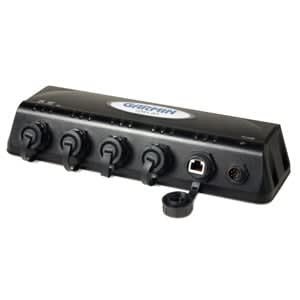
The broadest ecosystem — chartplotters, autopilot, radar, engine monitoring and LiveScope sonar all talk to each other natively. Best if you want one brand handling your whole boat’s electronics long-term.
Lowrance
Part of the wider Simrad/B&G family, so it integrates well if you’re already running B&G autopilot or Simrad radar. SolarMAX HD screens are excellent in bright sun, and ActiveTarget live sonar has a strong following among competitive bass anglers.
Humminbird
Owned by the same parent company as Minn Kota, so Humminbird sonar and Minn Kota trolling motors (particularly with i-Pilot Link) integrate especially well. A strong choice if Minn Kota is your trolling motor of choice.
Our advice
Look at what you already own or plan to add — trolling motor, autopilot, radar — and pick the brand that shares an ecosystem with it. Starting from scratch with no strong preference? Ask us and we’ll talk through the trade-offs for your specific boat.
A heading sensor is one of those accessories most boaters don’t know they need until they’ve fished slow-trolled water or anchored in current — then it becomes obvious. Here’s what it actually fixes.
The problem it solves
Your chartplotter’s default “heading” is usually calculated from GPS movement — which works fine at speed, but becomes unreliable or jumps around when you’re moving slowly, drifting, or sitting still at anchor. A dedicated heading sensor like the Garmin SteadyCast Heading Sensor uses a solid-state compass instead, so it reports accurate heading regardless of speed — including at a dead stop.
Who actually benefits
Installation
It’s a simple NMEA 2000 network device — connect it to your existing network backbone and it just shows up as a data source your chartplotter can use. No special mounting requirements beyond keeping it away from major magnetic interference (large speakers, big metal fuel tanks).
If you don’t run an autopilot and rarely drift or slow-troll, you likely won’t notice the difference. If either of those applies to you, it’s a genuinely worthwhile upgrade. Get in touch if you’re not sure whether your chartplotter supports it.
Both Humminbird and Garmin refreshed their flagship live sonar in the past year, and the upgrades are real — not just a resolution bump on the box. If you’re deciding between Humminbird MEGA Live 2 and Garmin LiveScope 2, here’s what’s actually changed and which suits which angler.
What’s new in each generation
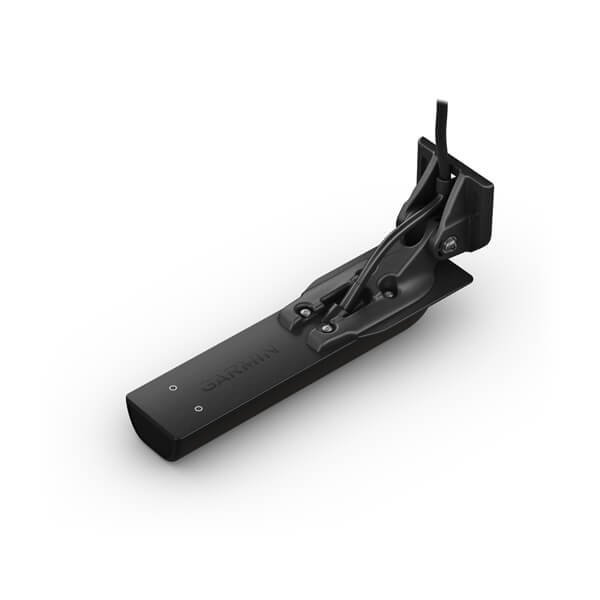
Garmin LiveScope 2 (LVS42HD) — up to 50% more image detail at close range than the original LiveScope, castable to 125ft, and connects directly to compatible MFDs with no separate GLS 10 black box required.
Humminbird MEGA Live 2 — sharper target definition and improved range performance over the original MEGA Live, still requiring the MEGA Live black box for most installs.
Installation
This is where LiveScope 2 pulls ahead for anyone doing a fresh install — dropping the black box means less wiring, less mounting space needed, and a tidier console. If you’re upgrading an existing Humminbird MEGA Live system, sticking with Humminbird avoids buying a whole new ecosystem.
Image quality in practice
Both systems produce genuinely usable, near-video-quality images of fish and structure in real time. Garmin’s improvements are most noticeable at close range (under 30ft), which matters for finesse fishing around cover. Humminbird’s gains show up more in target separation at mid-range, useful when working a school of fish.
Our recommendation
New installs with no existing black box: go Garmin LiveScope 2 for the simpler wiring and direct MFD connection — see the Garmin LiveScope 2 HD Transducer (LVS42HD). Already running Humminbird sonar: MEGA Live 2 keeps everything in one ecosystem. Either way, both are genuine stock with full manufacturer warranty and UK & Europe delivery — get in touch if you’re not sure which fits your current setup.
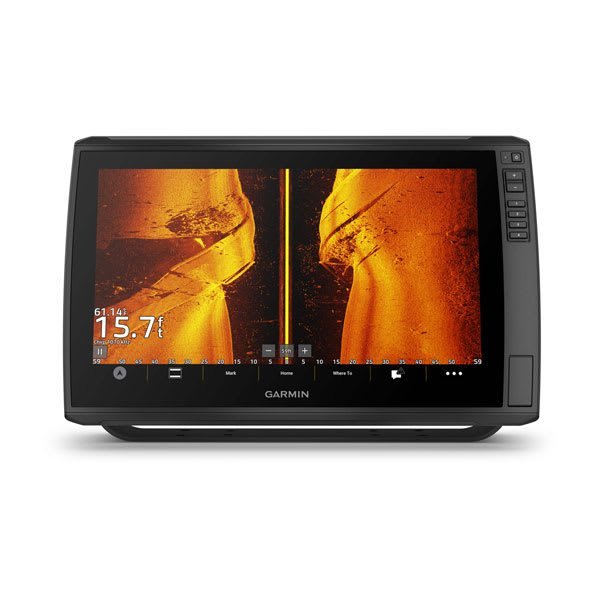
If you’re shopping for a 12-inch chartplotter, the shortlist almost always comes down to two names: Garmin ECHOMAP Ultra 2 and Lowrance HDS Pro. Both are LiveScope/ActiveTarget-ready, both come in similar price bands, and both have loyal followings. We’ve sold and fitted plenty of each, so here’s how they actually compare.
Screen and interface
The ECHOMAP Ultra 2 runs Garmin’s familiar touchscreen UI with physical keypad backup — handy in rough conditions or with gloves on. The HDS Pro uses Lowrance’s SolarMAX HD display, which is noticeably brighter in direct sun, plus a hybrid touch/keypad layout of its own. In side-by-side testing on a bright afternoon, the HDS Pro’s screen held a very slight edge for glare; the ECHOMAP’s menus felt a touch more intuitive for first-time users.
Sonar and live imaging
Garmin pairs the ECHOMAP with GT-series transducers and is LiveScope-ready — arguably the most established forward-facing sonar on the market, now in its second generation with LiveScope 2. Lowrance counters with Active Imaging and ActiveTarget 2, which many bass anglers rate just as highly for real-time target tracking. Neither is a wrong choice; it often comes down to which ecosystem your local fishing community already runs, since shared knowledge and settings help.
Feature
Garmin ECHOMAP Ultra 2 126sv
Lowrance HDS PRO 12
Display
12-inch touchscreen + keypad
12-inch SolarMAX HD touch + keypad
Live sonar
LiveScope-ready
ActiveTarget-ready
Charts
Navionics+ preloaded
C-MAP Discover OnBoard preloaded
Networking
Garmin Marine Network
Lowrance/Simrad NMEA 2000 ecosystem
Our verdict
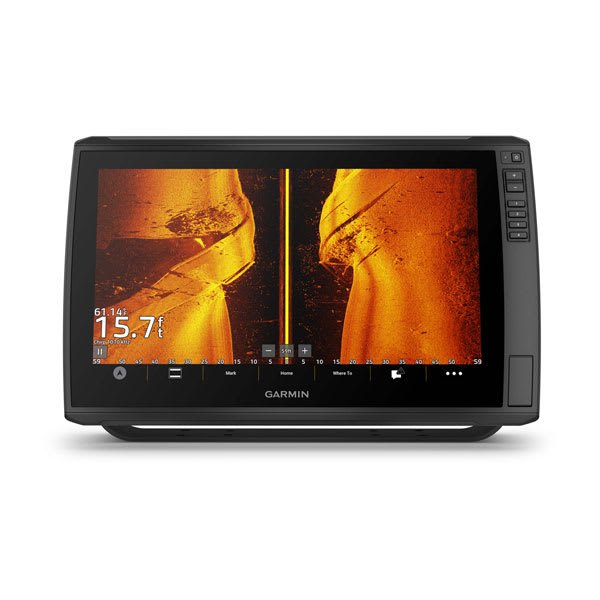
Both units are excellent, genuine, well-supported chartplotters and you won’t go far wrong either way. If you already run other Garmin electronics or want the deepest LiveScope ecosystem, go ECHOMAP. If brightness in direct sun is your priority or you’re already invested in the Lowrance/Simrad/B&G network, the HDS Pro is the stronger pick. Browse the Garmin ECHOMAP Ultra 2 126sv Bundle or the Lowrance HDS PRO 12 Bundle — both genuine stock with UK & Europe delivery.
FAQs
Can I mix Garmin and Lowrance electronics on one boat? Yes, but they won’t share sonar/network data across brands, so most anglers standardise on one ecosystem per boat.
Which has better resale value in the UK? Both hold value well; Garmin has a slight edge in the UK secondhand market currently. Unsure which is right for you? Get in touch and we’ll talk through your setup.