
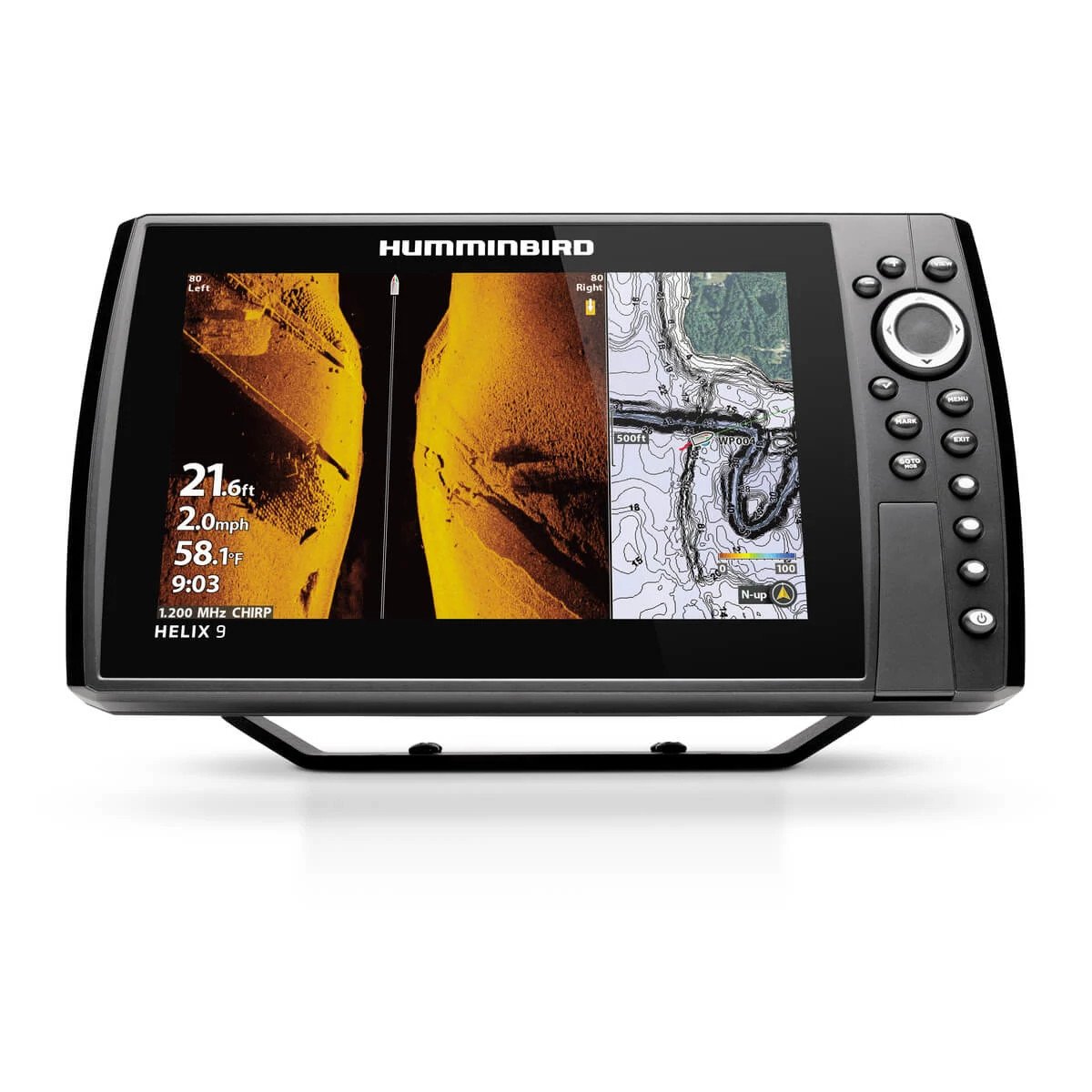
These three terms get thrown around constantly in fish finder marketing, and they genuinely do different things. Here’s what each shows you and when to use it.
CHIRP (traditional) sonar
CHIRP sends a sweep of frequencies rather than a single pulse, giving sharper target separation than older sonar. It shows a vertical slice of water directly beneath the boat — this is what gives you the classic “fish arch” and bottom hardness reading. It’s the best mode for tracking fish depth in real time while moving.
Down imaging
Down imaging uses a different frequency to produce a near-photographic picture of what’s directly under the boat — you can often make out individual fish, wood cover and rock piles far more clearly than on CHIRP. It’s slightly slower to interpret fish depth from, so most anglers run it alongside CHIRP rather than instead of it.
Side imaging
Side imaging scans out to either side of the boat rather than beneath it — brilliant for covering water quickly to locate structure, schools and drop-offs before you fish them. Think of it as a search tool, then switch to CHIRP or down imaging once you’ve found something worth stopping for.
Which do you actually need?
Most mid-range and above fish finders today include all three in one unit, so it’s less about choosing and more about learning to switch between them for the situation. Browse our full fish finder range or get in touch if you want help matching sonar features to how you fish.