Offshore and sea fishing put a premium on reliability and safety rather than the sonar sophistication that inshore bass fishing chases. Here’s the priority order we’d recommend.
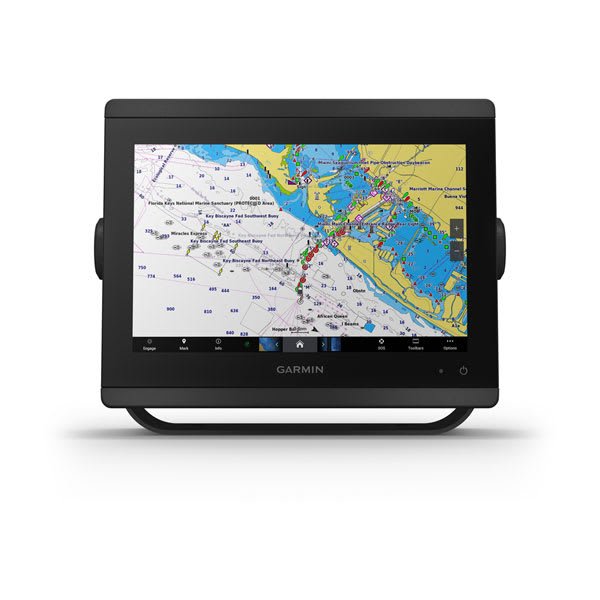
1. A reliable chartplotter with AIS
Knowing where commercial traffic is matters offshore in a way it rarely does inshore. A chartplotter with AIS overlay isn’t a luxury out past the harbour — see our Best Chartplotter for UK & European Waters guide.
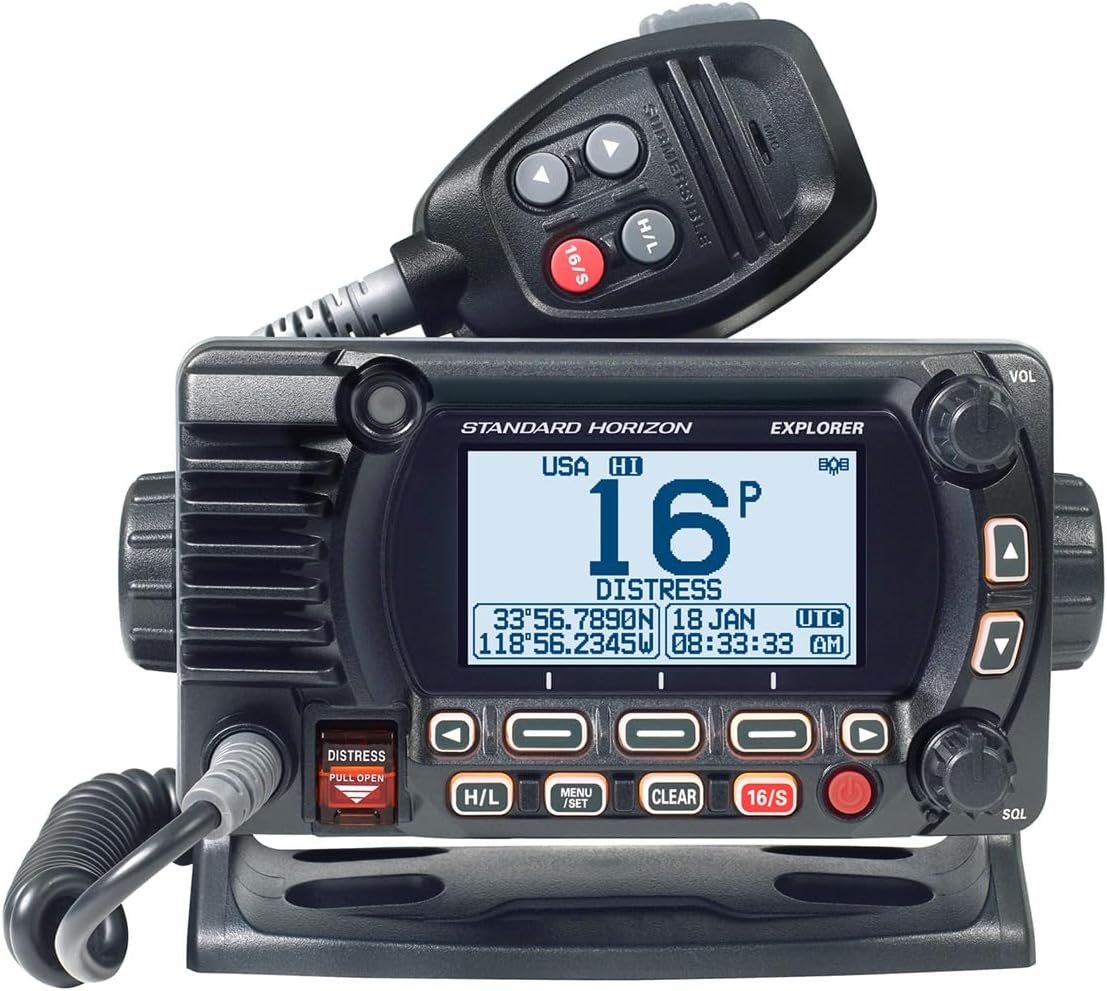
2. Fixed-mount VHF, plus a handheld backup
A fixed VHF with DSC is your primary means of raising the coastguard offshore. A handheld backup, ideally floating and waterproof, covers you if you have to abandon ship or the fixed unit fails. See our Fixed vs Handheld VHF guide.
3. A personal locator beacon
If you regularly fish beyond VHF range or in exposed water, a PLB is genuinely cheap insurance against the worst-case scenario. See our Best PLB guide.
Building an offshore-ready setup? Get in touch — we’ll help make sure nothing important gets missed.
A VHF radio is essential safety kit for anything beyond very sheltered inland waters — it’s how you raise the coastguard, get weather and traffic updates, and communicate with other vessels when a mobile phone has no signal. Here’s how to choose between fixed and handheld, and which units we’d recommend.
Best Handheld Upgrade: Cobra MR HH600 FLT BT Floating Handheld VHF Radio
The Cobra MR HH600 FLT BT Floating Handheld VHF Radio (£149.99) floats if dropped overboard and adds Bluetooth connectivity for wireless calling and music through the radio — a genuinely useful upgrade over a basic handheld for the same rough price bracket as some fixed units.
Best Fixed Mount: Standard Horizon GX1850 Fixed Mount VHF Radio and Standard Horizon GX2400 Matrix AIS Fixed Mount VHF Radio
Fixed mount radios transmit at higher power and connect to a proper external antenna, giving significantly longer range than a handheld. The Standard Horizon GX1850 Fixed Mount VHF Radio (£229.99) covers the essentials, while the Standard Horizon GX2400 Matrix AIS Fixed Mount VHF Radio (£344.99) adds a built-in AIS receiver — see other vessels’ positions directly on the radio’s display, genuinely useful in busy UK shipping lanes.
Fixed vs Handheld: Which Do You Need?
Fixed mount: higher power output (typically 25W vs 5-6W handheld), longer range, connects to a proper masthead antenna — the primary radio for any boat with a helm.
Handheld: essential backup if the fixed unit fails or you lose power, and the primary option for kayaks, tenders and small craft with no fixed installation.
AIS receiver: worth having on busier waters or if you cruise near shipping lanes — shows nearby vessel positions directly on the radio.
Most boats benefit from both — a fixed radio at the helm plus a handheld as backup or for the tender.
Frequently Asked Questions
Do I need a licence for a marine VHF radio in the UK? Yes — you need a Ship Radio Licence for the vessel and a Short Range Certificate (SRC) to operate the radio.
What’s the range of a handheld VHF? Typically a few miles depending on terrain and antenna height, versus 20+ miles for a fixed mount unit with a properly installed antenna.
Is AIS worth paying extra for? If you regularly cruise near commercial shipping lanes or in poor visibility, yes — it’s a genuine collision-avoidance aid.
Not sure which VHF setup suits your boat? Our team can advise on fixed vs handheld and antenna requirements — browse the full range in our online shop.