Tag: marine electronics UK

  • Best Marine Electronics for First-Time Boat Owners

    Best Marine Electronics for First-Time Boat Owners

    best marine electronics for first time boat owners

    Congratulations on the first boat — now the electronics shopping list can feel endless. Here’s a sensible order to buy in rather than trying to kit everything out at once.

    1. VHF radio — buy this first

    Before sonar, before a fancy chartplotter — a VHF radio is the safety-critical item. See our VHF buying guide for fixed vs handheld.

    2. A basic chartplotter/fish finder combo

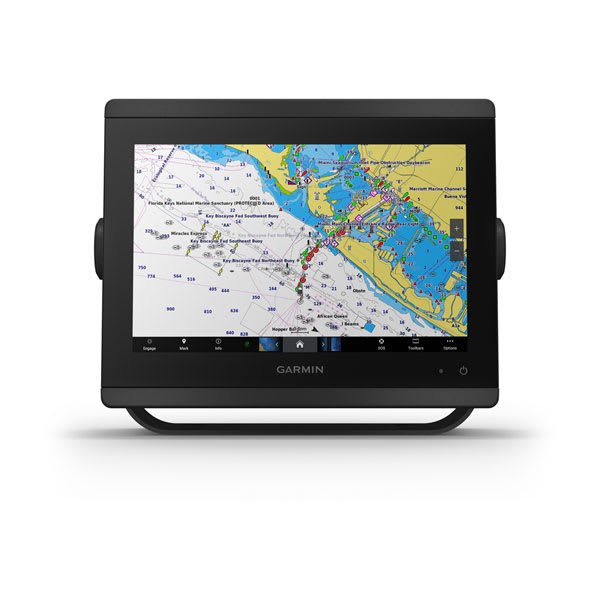
    You don’t need a flagship unit on day one. A 7-9 inch combo covers navigation and basic sonar while you learn your local water — see our Best Fish Finder guide for entry-level picks.

    3. Safety gear

    PFDs for everyone aboard and, if you’ll be venturing further offshore, a PLB — see our PFD guide.

    4. Upgrade later, once you know your needs

    Live sonar, GPS trolling motors and bigger displays are genuinely excellent — but they’re upgrades to buy once you know exactly how you use the boat, not before. Resist the urge to over-buy in the first month.

    New to boating and want a straightforward starter recommendation? Get in touch — tell us your boat and how you plan to use it.
  • Best Handheld GPS for Boaters & Anglers

    Best Handheld GPS for Boaters & Anglers

    best handheld GPS for boaters and anglers

    A handheld GPS isn’t just for hikers — for boaters and anglers it’s a genuinely useful primary unit for small craft, or a smart backup for anyone running a fixed chartplotter offshore.

    Why carry one even with a fixed chartplotter

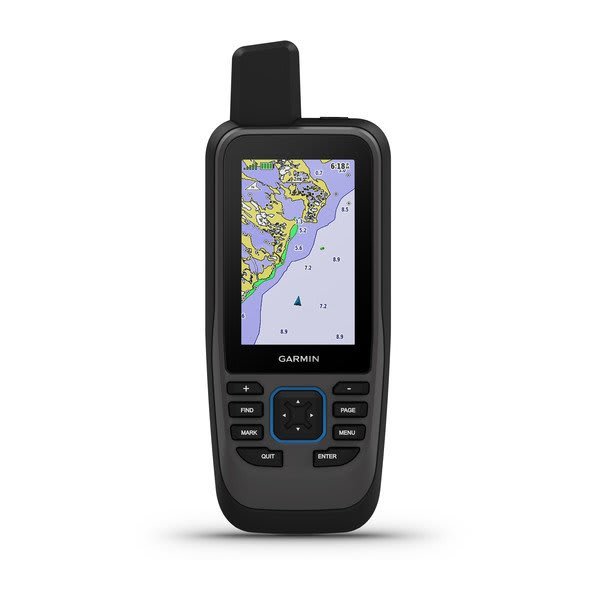
    Electronics fail, and a fixed chartplotter going dark offshore is a genuinely bad moment. A charged handheld like the Garmin GPSMAP 86sc in a dry bag is cheap insurance — floating, waterproof, and preloaded with BlueChart g3 charts so it’s immediately usable, not just a blank GPS.

    Primary use for kayaks and small tenders

    For a kayak or small tender where a fixed install isn’t practical, a handheld gives you charts and navigation with zero wiring — clip it to your PFD or deck rigging and you’re set.

    What to look for

    • Floating in water — not just splash-resistant
    • Preloaded marine charts, not just a basemap
    • Battery life rated for a full day’s use

    Browse our full GPS and chartplotter range or get in touch if you’re deciding between handheld and fixed-mount for your boat.

  • Best Marine Network Switch & NMEA 2000 Setup Guide

    Best Marine Network Switch & NMEA 2000 Setup Guide

    marine network switch NMEA 2000 setup guide

    Once you have more than one display, sonar source or sensor on a boat, you need a proper network rather than a tangle of point-to-point cables. Here’s how NMEA 2000 networking works in plain terms.

    The backbone concept

    NMEA 2000 runs as a “backbone” — a single cable run with T-connectors branching off to each device — rather than each unit wiring back to a central point individually. This makes adding a new device later far simpler than rewiring everything.

    When you need a network switch

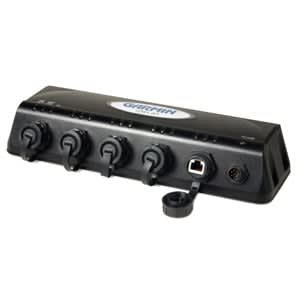
    A device like the Garmin 4-Port Marine Network Switch lets multiple displays share sonar and GPS data from a single source — so a second station display shows the same LiveScope feed as your primary helm, without needing its own transducer. If you’re running two or more displays on one boat, this is what makes shared data actually work.

    Planning ahead

    If you’re only running one display now but might add a second station later, it’s worth running the backbone with spare capacity from day one — much easier than adding a network switch retroactively once everything’s sealed up. Get in touch if you want help planning a multi-display network before you start wiring.

  • How to Install a Fish Finder: Step-by-Step Guide

    How to Install a Fish Finder: Step-by-Step Guide

    how to install a fish finder step by step guide

    Installing a fish finder yourself saves on fitting costs and isn’t as daunting as it looks. Here’s the process broken into clear steps.

    1. Plan the mounting position

    Choose a spot that’s visible from the helm, protected from spray where possible, and has clear access behind the console for cabling. Check swing clearance for any hinged panels or hatches nearby.

    2. Mount the transducer

    Transom-mount transducers need to sit level with the hull bottom, clear of propeller wash and any turbulence sources like strakes or through-hull fittings. Follow the manufacturer’s positioning diagram closely — a poorly placed transducer is the most common cause of noisy or unreliable readings.

    3. Run and secure the cabling

    Keep transducer and power cables away from other electrical wiring where possible to reduce interference, and secure every few inches to prevent chafe. Leave a small service loop at both ends.

    4. Power and network connection

    Wire power through a dedicated fuse, and if you’re networking multiple devices, a marine network switch keeps everything talking cleanly on one NMEA 2000 backbone rather than daisy-chaining devices.

    5. Test before you seal anything up

    Power on and confirm sonar returns and GPS lock before finishing any panel work or sealant — much easier to fix a placement issue now than after everything’s buttoned up. Not confident doing it yourself? get in touch and we can talk you through your specific setup.

  • Garmin vs Lowrance vs Humminbird: Which Brand Is Best for UK Anglers?

    Garmin vs Lowrance vs Humminbird: Which Brand Is Best for UK Anglers?

    Garmin vs Lowrance vs Humminbird which brand is best

    There’s no objectively “best” brand among Garmin, Lowrance and Humminbird — all three are genuine, well-supported manufacturers. The right pick usually comes down to ecosystem fit rather than any single spec sheet.

    Garmin

    The broadest ecosystem — chartplotters, autopilot, radar, engine monitoring and LiveScope sonar all talk to each other natively. Best if you want one brand handling your whole boat’s electronics long-term.

    Lowrance

    Part of the wider Simrad/B&G family, so it integrates well if you’re already running B&G autopilot or Simrad radar. SolarMAX HD screens are excellent in bright sun, and ActiveTarget live sonar has a strong following among competitive bass anglers.

    Humminbird

    Owned by the same parent company as Minn Kota, so Humminbird sonar and Minn Kota trolling motors (particularly with i-Pilot Link) integrate especially well. A strong choice if Minn Kota is your trolling motor of choice.

    Our advice

    Look at what you already own or plan to add — trolling motor, autopilot, radar — and pick the brand that shares an ecosystem with it. Starting from scratch with no strong preference? Ask us and we’ll talk through the trade-offs for your specific boat.

  • Best Marine GPS for Small Boats & Dinghies

    Best Marine GPS for Small Boats & Dinghies

    best marine GPS for small boats and dinghies

    A small boat or dinghy doesn’t need — or often have room for — a full-size flagship chartplotter. Here’s what actually fits and works well on smaller craft.

    Compact fixed-mount units

    A 5-7 inch chartplotter is plenty for most dinghies and small RIBs, giving you charts and basic sonar without eating console space or budget. Pair it with a simple transom-mount transducer and you’ve covered the essentials.

    Handheld units — the flexible option

    The Garmin GPSMAP 86sc is a genuinely clever option for small boats — no permanent installation needed, fully waterproof and floating, and it moves with you if you switch boats or want it as a backup on a bigger vessel too.

    Our recommendation

    If your dinghy is a tender or occasional-use boat, go handheld — it’s flexible and needs no wiring. If it’s your primary small boat and you want a permanent, always-ready display, a compact fixed-mount unit is the better long-term choice. See our Best Marine GPS Under £500 guide for specific picks, or ask us what fits your boat.

  • How Much Does a Boat Electronics Setup Cost? UK Price Guide 2026

    How Much Does a Boat Electronics Setup Cost? UK Price Guide 2026

    boat electronics setup cost UK price guide

    One of the most common questions we get is simply “what’s this going to cost me?” Here’s a realistic breakdown across three budget tiers.

    TierChartplotter/Fish FinderTrolling MotorVHFTypical Total
    Budget£300-£500£400-£800 (or none)£80-£150£500-£1,500
    Mid-range£800-£2,000£1,500-£2,500£150-£300£2,500-£5,000
    Premium/tournament£3,000-£6,000+£2,500-£3,500£300-£500£6,000-£10,000+

    Where to spend first

    If budget is tight, prioritise a reliable fish finder/chartplotter combo over a premium trolling motor — you can upgrade the motor later without touching the wiring you’ve already run for the display. See our full price breakdown by category or browse the shop directly.

    Working to a specific budget? Tell us your number and we’ll suggest the best combination of genuine gear for it.

  • Best Marine Electronics for Sea Fishing & Offshore Anglers

    Best Marine Electronics for Sea Fishing & Offshore Anglers

    best marine electronics for sea fishing offshore anglers

    Offshore and sea fishing put a premium on reliability and safety rather than the sonar sophistication that inshore bass fishing chases. Here’s the priority order we’d recommend.

    1. A reliable chartplotter with AIS

    Knowing where commercial traffic is matters offshore in a way it rarely does inshore. A chartplotter with AIS overlay isn’t a luxury out past the harbour — see our Best Chartplotter for UK & European Waters guide.

    2. Fixed-mount VHF, plus a handheld backup

    A fixed VHF with DSC is your primary means of raising the coastguard offshore. A handheld backup, ideally floating and waterproof, covers you if you have to abandon ship or the fixed unit fails. See our Fixed vs Handheld VHF guide.

    3. A personal locator beacon

    If you regularly fish beyond VHF range or in exposed water, a PLB is genuinely cheap insurance against the worst-case scenario. See our Best PLB guide.

    Building an offshore-ready setup? Get in touch — we’ll help make sure nothing important gets missed.

  • Best Marine Electronics for Bass Fishing UK

    Best Marine Electronics for Bass Fishing UK

    best marine electronics for bass fishing UK

    Bass fishing has driven more marine electronics innovation than any other discipline in the last five years — forward-facing sonar in particular was built with bass anglers in mind. Here’s what’s actually worth investing in.

    1. Forward-facing live sonar

    Garmin LiveScope, Humminbird MEGA Live and Lowrance ActiveTarget have genuinely changed how competitive bass anglers fish — watching a bass react to your lure in real time is a different game entirely. If you fish competitively or want to close the gap fastest, this is the single highest-impact upgrade. See our Best Live Sonar System comparison for the full breakdown.

    2. A GPS trolling motor with Spot-Lock

    Holding position on a spot without dropping anchor is essential for working structure thoroughly. The Minn Kota Ultrex Quest range with Spot-Lock is the standard here.

    3. A capable chartplotter/sonar combo

    CHIRP, side imaging and down imaging together let you locate structure fast before committing to forward-facing sonar for the close-in work. A 9-inch unit is the practical minimum for reading detail while running multiple sonar views.

    Building a full setup from scratch? Get in touch and we’ll help you prioritise spend across sonar, GPS and trolling motor based on your budget.

  • Best 16-Inch Chartplotter UK 2026: GPSMAP 8616 vs HDS Pro 16

    Best 16-Inch Chartplotter UK 2026: GPSMAP 8616 vs HDS Pro 16

    best 16 inch chartplotter UK Garmin GPSMAP 8616 vs Lowrance HDS Pro 16

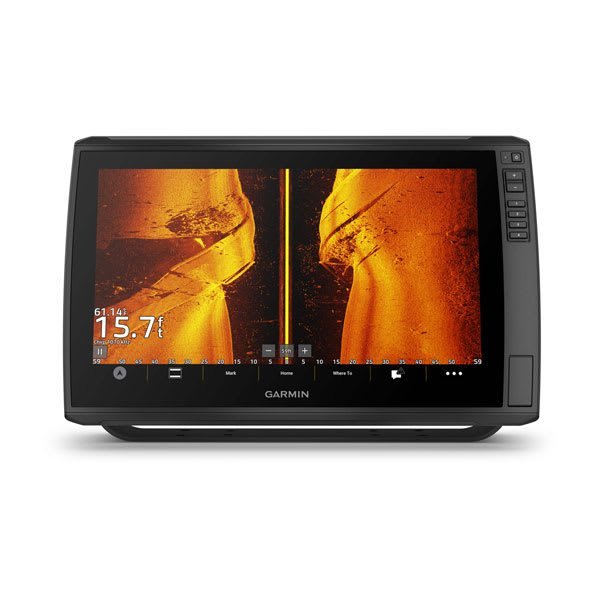
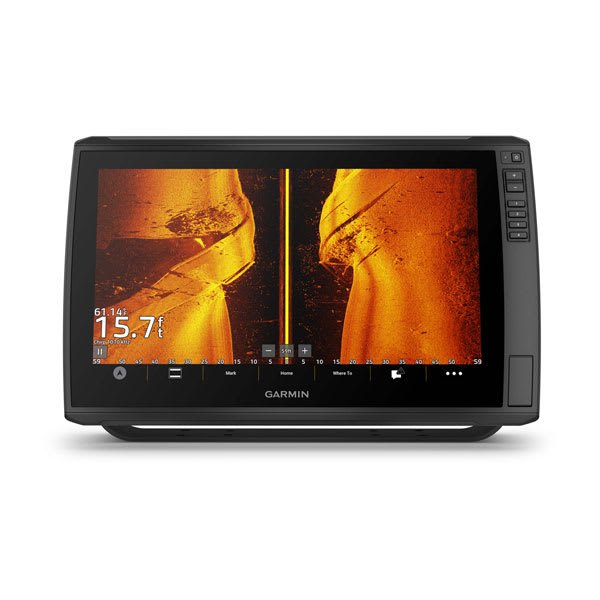
    A 16-inch screen at the helm changes how you fish and navigate — more chart detail, room for split-screen sonar and radar, and genuinely easier reading from a distance. The two mainstream options in this size are the Garmin GPSMAP 8616 GN+ and the Lowrance HDS PRO 16. Here’s how they stack up.

    Display-only vs bundled sonar

    Both are available as a display-only “head unit” (no transducer), which suits anyone adding a second station or already running a black box sonar system elsewhere on the boat. Our Garmin GPSMAP 8616 GN+ 16-Inch Display Unit and the used Lowrance HDS PRO 16 head unit are both popular choices for exactly this reason — the used HDS PRO 16 in particular is a strong budget route into a 16-inch screen.

    Networking and ecosystem

    At this size, these displays are almost always the hub of a wider network — radar, autopilot, engine data, and multiple sonar sources. Garmin’s network is deep and mature; Lowrance’s ties into the wider Simrad/B&G ecosystem, which matters if you’re running B&G autopilot or Simrad radar elsewhere.

    Budget tip

    Buying a 16-inch display new is a serious investment. A professionally inspected used head unit — like our HDS PRO 16 — can save you well over £1,000 versus new, with the same 90-day used-goods warranty as our other refurbished stock. Worth considering if this is a second station rather than your primary helm display.

    Not sure which fits your network? Get in touch — we’re happy to talk through compatibility before you buy.